We Nearly Bought a Tow-Behind Air Compressor. The Real Fix Was 2 Drops of Oil.
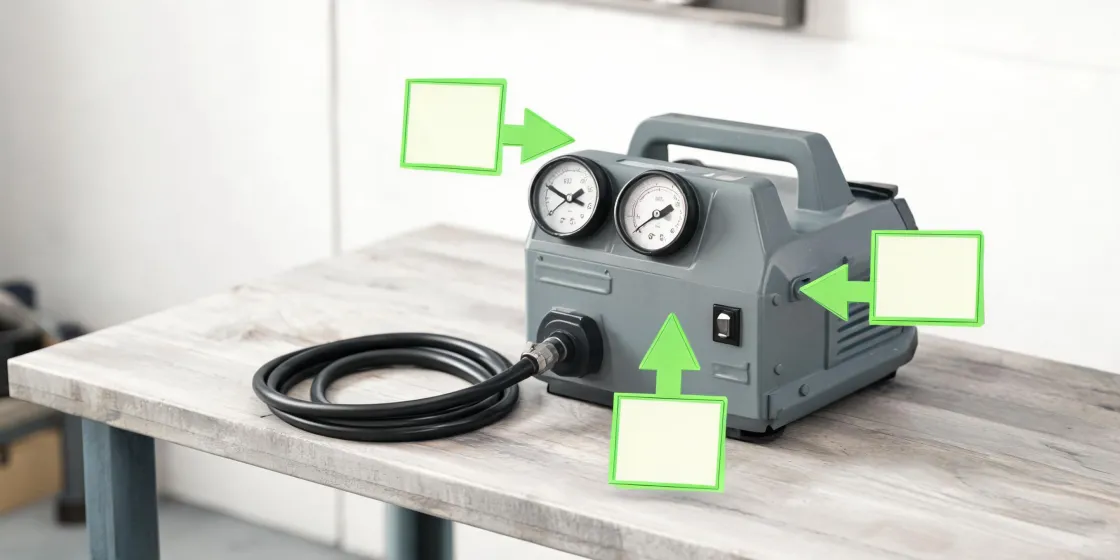
On a Tuesday in March 2024, I was holding a dead 1/4 air ratchet in one hand and my phone in the other. My search history that afternoon told the story: 1/4 air ratchet replacement, then how much air tool oil to use, and finally the desperate one—tow behind air compressor for sale. The first two searches were reasonable. The last one was me panicking.
Context, because it matters: I’m the office administrator for a 14-person restoration and customization shop. I manage purchasing for tools, consumables, and replacement parts across eight vendors. I don’t turn wrenches for a living, but I’m the person who gets called when a tech is standing at the bench waiting for a tool that quit.
We lost two 1/4 air ratchets in four months. Both followed the same script: slow, then weak, then seized. The consensus on the floor was that the compressor couldn’t keep up. One of the crew found a used tow-behind air compressor for sale and sent it over with a note that said we needed to stop messing around and buy a real compressor.
That six-thousand-dollar price tag made me stop. Not because the crew was entirely wrong about capacity—they weren’t—but because I’d been burned by impulse purchasing before. When I took over buying in 2022, I made a rule: figure out the cause first and check the price last. I almost broke that rule.
Instead of ordering a bigger compressor, I did something slower. I handed the seized ratchet to a local pneumatic tool rebuilder and asked what he saw. He had it apart in about four minutes. The rotor wasn’t broken. It was coated in a sticky varnish—oil, dust, and moisture baked into something close to glue. The vanes were fine. They just couldn’t move.
The Real Problem Wasn’t the Compressor. It Was Everything Before the Tool.
Start with oil. I had read a dozen forum threads about air tool oil, and the common answer was basically keep it oiled. Vague, and in our case, misleading. The manual that came with the ratchet was more specific: 2 to 3 drops of pneumatic tool oil in the air inlet before use. Let me be plainer: not a weekly blast of WD-40, not a capful of whatever was in the drawer, and not a little extra for safety. Two to three drops. Run the tool for a few seconds so the oil spreads before you put it under load.
Our shop didn’t have that routine. We had a can of WD-40 and a shared memory that somebody oiled the tools last week—or maybe last month. And when we did oil them, we over-oiled them. Excess oil catches dust, and dust plus oil becomes a grinding paste inside the tool. Over-oiling a 1/4 air ratchet isn’t helping it. It’s feeding it sandpaper.
The second issue was moisture. Our old compressor was a used steel-tank unit that had sat in the back corner for years. Nobody had ever drained the tank—at least not while I was there. Condensation accumulated and got pushed straight down the air line. That water carried rust particles from the tank into the tools. Oil, water, and rust are exactly the ingredients for the varnish that rebuilder showed me.
From the outside, this looked like a compressor capacity problem. The tools felt weak, so the answer seemed obvious: get a compressor that never ran out of breath. A bigger tank or a tow-behind unit would keep the pressure steady, and the ratchet would feel stronger for a while. But it wouldn’t remove the water, and it wouldn’t stop the sludge. It would just delay the diagnosis and cost thousands.
The Almost-$6,000 Misdiagnosis
I went back through the purchase log before writing this. The direct tool replacements came to roughly $600: two ratchets, one overnight freight charge, and a die grinder that was starting to sound rough. I don’t remember the exact total and won’t pretend to. The labor cost was harder to measure. Two techs lost the better part of two days using hand tools in spots where the air ratchet used to finish in seconds.
And then there was the almost-purchase. The used tow-behind compressor was listed at $6,000. Realistically, we would have used it two or three times a year. We were ready to spend $6,000 to avoid doing 10 minutes of maintenance a day.
What We Did Instead
First, we wrote down the tools we actually run on a normal day: a 1/4 air ratchet, a pin nailer in the trim room, a blow gun, and a tire chuck. All intermittent. None needs continuous CFM. That list killed the tow-behind idea, and it also stopped us from buying an industrial compressor we didn’t need.
We ended up with a California Air Tools 2010ALFC tank air compressor. I’m not going to quote the spec sheet from memory; check the current numbers for your elevation and duty cycle. What I remember from the decision was the shape of it: a 10-gallon aluminum tank, quiet enough to sit inside the shop, and a company that actually sells replacement parts for the things that wear out.
And yes, I looked for a California Air Tools coupon code once the model was settled. I think I found one in their email promotions—don’t hold me to the exact percentage. It paid for an inline water separator, which was the accessory that actually mattered. But the coupon came last, after the decision. A discount shouldn’t be what picks your compressor.
The fix that changed everything, though, was a laminated index card taped to the compressor. Morning: 2 to 3 drops of air tool oil in every tool that will be used, then run it for a few seconds. End of day: shut the compressor off, bleed the tank, and drain the condensation. Weekly: check the inline separator and empty it if needed.
That card is the real cost difference. Ten minutes of prevention per day has saved us more than any coupon or compressor deal ever could. The replacement 1/4 air ratchet is still running after eight months, the tool-replacement budget is quiet, and nobody has sent me a tow-behind link since. If we ever need a unit that big, we’ll rent it. Buying one to fix a maintenance problem would still be a mistake—and now I have the receipts to prove it.

Maren Jorgensen
Maren Jorgensen is an independent hand tool and torque applications analyst covering wrenches, pliers, screwdrivers, hammers, sockets, ratchets, hex keys, and tool sets. She applies ISO 6789-1 torque-tool conformance principles while examining jaw capacity, leverage, fastener engagement, torque range, accuracy, handle geometry, and material hardness. Her practical guides help tradespeople and procurement teams select suitable tools, plan controlled tightening, and compare durability without relying on brand reputation alone.