Model Sizing
We compare tool air demand, run time, tank recovery, and noise expectations so a compressor is neither undersized nor needlessly large.
Guided support
Choosing air equipment can feel like reading a wall of numbers: CFM, PSI, tank gallons, duty cycle, noise level, fittings, drains, filters, and tool demand all compete for attention. Our service page turns that into a step-by-step conversation. We help homeowners, makers, maintenance teams, and light production buyers decide what matters first, what can be added later, and when a larger tank or accessory package is worth it.
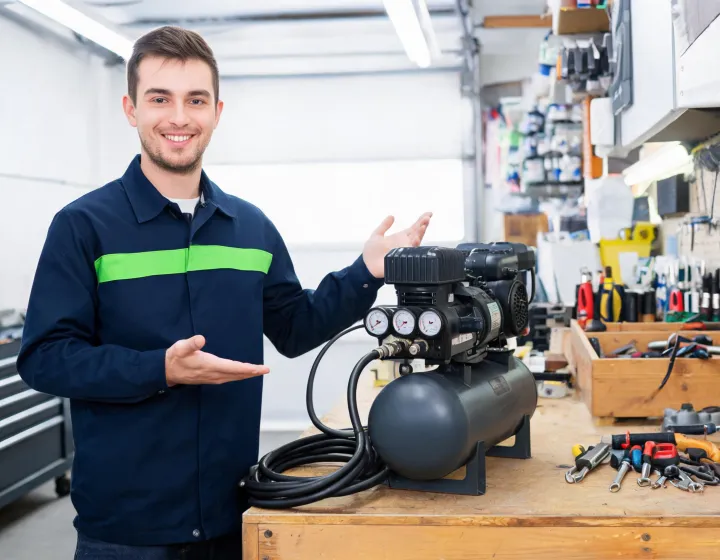
Service areas
Use these paths when you are comparing models, planning a cleaner air line, or trying to keep an existing compressor running consistently.
We compare tool air demand, run time, tank recovery, and noise expectations so a compressor is neither undersized nor needlessly large.
Regulators, moisture filters, couplers, hoses, and automatic drains are mapped to the way you actually use the equipment.
When a maintenance question appears, we help identify the likely replacement part family and the information needed for a clean request.
Authorized dealer and online-retailer guidance keeps availability, current offers, and shipping timing easier to check.
Embedded FAQ
The best service conversations are practical. We start with the tool you want to run, then narrow noise limits, outlet requirements, tank portability, and the fittings that prevent small leaks from becoming daily annoyances.
Users often compare compressors by tank size alone, then discover that hose length, tool demand, duty cycle, and room noise changed the real experience.
With the task defined first, the right compressor class, regulator package, and maintenance rhythm are easier to choose and easier to explain to a team.
Inline form
Include the tool type, operating pressure, expected run time, room size, and whether low noise or portability is the top priority. A short note is enough to begin.