How to Choose California Air Tools Compressors for Rush B2B Jobs: 8010, 1620S, PC1010, and 5 HP Motors
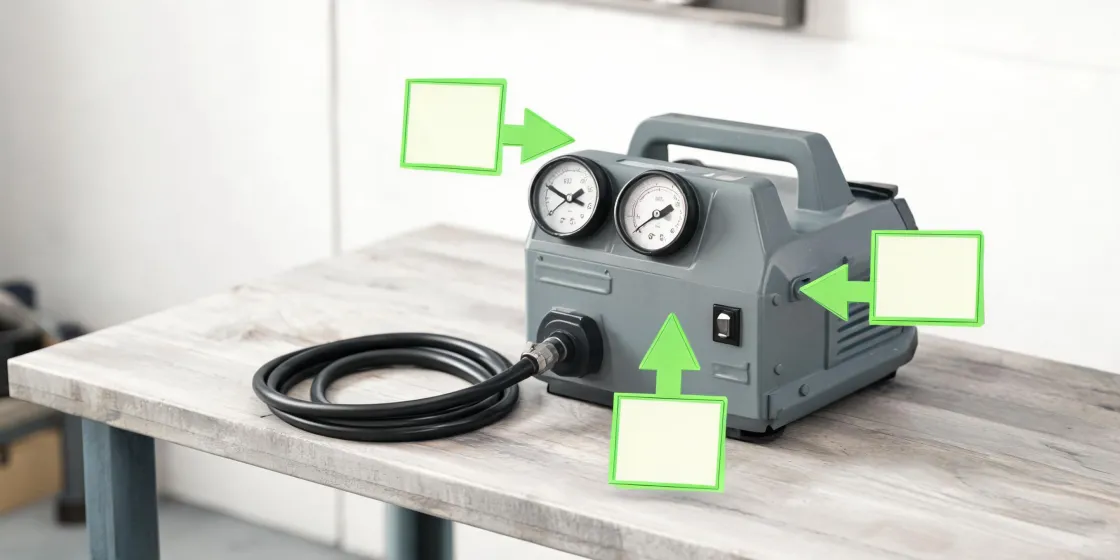
If you need a rush air compressor for a contractor or workshop, the California Air Tools 8010 is usually the safest bet for portable 120V jobs. The 1620S is the better pick when you need more tank capacity and can plan for 240V. The PC1010 is for small trim jobs, not production. And if your job calls for a 5 HP air compressor motor, you're in a different category—expect 240V, a dedicated circuit, and a longer lead time.
I coordinate rush equipment orders for an industrial supply company. I've handled 200+ rush orders in 9 years, including same-day turnarounds for contractors and workshops. In March 2024, a cabinet shop called at 4:30 PM needing a California Air Tools 8010 air compressor for a job the next morning. Normal lead time was 3-5 days. We found one at a regional distributor, paid $140 extra in freight (on top of the regular base cost), and delivered by 7:00 AM. The client's alternative was pushing a $12,000 install back a week.
That experience is why I start with the 8010 for most emergency calls. It's a 1.0 HP, 8-gallon ultra-quiet compressor that runs on standard 120V. For a lot of B2B buyers—trim carpenters, small cabinet shops, mobile mechanics—it hits the sweet spot. It's not a production machine. It's a 'get the job done without annoying the whole building' machine.
The quick answer: which model for which rush job
Here's how I triage the California Air Tools line when a deadline is tight:
- California Air Tools 8010 air compressor: Best for 120V portable jobs, trim work, nail guns, small spray tasks. Usually the easiest to source quickly. If you're in a shared building or residential area, this is probably the model you want.
- California Air Tools 1620S: Better when you need a 20-gallon tank and more runtime. It's a 2.0 HP unit, so it likely needs 240V in many setups. Do not assume you can just plug it into a standard wall outlet. Check the nameplate.
- Air compressor PC1010: The 1-gallon portable model. Good for tiny trim jobs, air brushing, or one-off inflation. It is not a substitute for an 8010 if you're running a framing nailer all day. I've seen buyers make that mistake (and then call back frustrated).
- 5 HP air compressor motor: This is industrial territory. A 5 HP motor usually means 240V, higher CFM, and a serious electrical circuit. If you're ordering this on a rush basis, confirm the motor frame, RPM, phase, and voltage before you pay for expedited shipping.
The question everyone asks is 'what's the price?' The question they should ask is 'what's the electrical requirement and duty cycle?' Most buyers focus on tank size and completely miss amp draw, breaker size, and whether the compressor is oil-lube or oil-free. That's an outsider blindspot that causes more emergency returns than actual defects.
What category is an air compressor in taxonomy?
Short answer: it depends on the taxonomy, but in most B2B and retail systems, an air compressor is not classified as a power tool. It usually sits under pneumatic equipment or industrial machinery.
In retail product taxonomies (think Amazon or Home Depot), you'll often find air compressors under Tools & Home Improvement > Power Tools > Air Compressors & Inflators. That's a merchandising category, not a technical one. In B2B industrial taxonomies, it's more likely Industrial Supplies > Pneumatic Equipment > Air Compressors. In manufacturing classification, NAICS 333912 covers Air and Gas Compressor Manufacturing. For import/export, the HS code is typically 8414.80. So when someone asks 'what category is air compressor in taxonomy,' the honest answer is: it depends on whether you're talking retail, industrial procurement, or customs. As of January 2025, that's the standard split I see with suppliers.
Why does this matter for rush orders? Because if you're searching a distributor's catalog under 'power tools,' you might miss the exact California Air Tools model you need. I've had buyers waste 30 minutes because they were in the wrong category tree. The PC1010 and 8010 might show up under different branches in the same system.
Why I trust the 8010 for most emergency calls (with limits)
I don't have hard data on industry-wide failure rates for every California Air Tools model. But based on our 9 years of rush orders, my sense is that the 8010 has the best combination of availability, 120V compatibility, and quiet operation for B2B service calls. It's not 'absolutely silent'—no compressor is. But it's quiet enough that contractors use it inside finished homes without getting kicked off the job.
That's the practical advantage. For a cabinet installer, the difference between a standard oil-lube compressor and a California Air Tools ultra-quiet model is the difference between wearing ear protection and having a normal conversation. I wish I had tracked how many callbacks we got specifically because of noise complaints. What I can say anecdotally is that since we started recommending the 8010 for indoor jobs, those complaints dropped noticeably.
But here's the limitation: the 8010 is not for continuous duty. If you're running a sandblaster, a large spray gun, or multiple nailers at once, you'll drain the 8-gallon tank and wait. It will probably work for a short burst. It will rarely keep up with production. That's when the 1620S or a larger industrial unit makes more sense.
The 1620S and 5 HP motor: when you need more power
The California Air Tools 1620S is a 20-gallon, 2.0 HP compressor. It gives you more air storage and higher CFM than the 8010, but it usually requires 240V. If you're rushing a job and the site only has 120V, the 1620S is not a plug-and-play solution. You might need an electrician, a generator, or a different model. That's a boundary condition I always ask about before promising a delivery time.
A 5 HP air compressor motor is another step up. These motors are often used in industrial compressors, and they typically run on 240V single-phase or three-phase power. The motor itself is a component—if you're replacing a motor on a rush basis, you need the frame size, RPM, rotation, voltage, and phase to match. I've seen buyers order a 5 HP motor without checking the frame, then pay rush shipping twice. Not fun.
If you're in that situation, call the supplier and confirm the specs. Don't rely on a generic product page. For California Air Tools replacement parts, the model number matters. The 1620S and 8010 use different motors, belts, and pressure switches. I've tested 6 different rush delivery options for parts; the fastest one is usually the one that already has your exact model in stock.
What I'd avoid on a rush order
I recommend California Air Tools for a lot of B2B cases, but not all. Here's how to know if you're in the group where it might not be the best fit:
- You need continuous industrial CFM. A portable 8010 or PC1010 will not keep up with a production line. Look at larger industrial compressors or a rotary screw unit.
- You have no 240V access. If you're set on a 1620S or a 5 HP motor but only have 120V, you're setting yourself up for a delay. Either find a 120V model or arrange power first.
- You need same-day delivery on a 5 HP motor. That's rare. Most distributors don't stock every frame size. You might pay 50-100% over standard freight and still miss the deadline.
- You're buying for a one-time inflation job. The PC1010 could work, but a cheaper tire inflator might be enough. Don't overbuy just because it's a rush.
Honestly, the best rush order is the one you don't have to rush. If you know a job is coming, order the 8010 or 1620S ahead of time. But when you're already behind, the 8010 is usually the model that saves the day. It's not the cheapest, and it's not the most powerful. It's the one that most often fits the actual job site.
In my role coordinating rush orders for contractors, the biggest mistake I see is buying for the brochure instead of the breaker panel. Match the compressor to the power you actually have, and you'll avoid most emergency returns.
As of January 2025, California Air Tools still has one of the widest ultra-quiet ranges for portable and workshop use. Just remember: 'ultra-quiet' is a relative term. It's quieter than many standard compressors, but it's not silent. And no compressor is maintenance-free. If you're ordering parts, check the model number twice. That's the kind of habit that keeps a rush order from becoming a reorder.

Omar Vukovic
Omar Vukovic is an independent garden and outdoor power equipment analyst covering pruning shears, loppers, hedge shears, lawn mowers, tillers, chainsaws, and related cutting systems. He applies IEC 62841-4 safety principles while comparing blade geometry, chain speed, bar length, cutting capacity, battery runtime, vibration, kickback controls, noise, ergonomics, and maintenance access. His practical articles help landscape teams and buyers choose equipment for vegetation, workload, operator control, serviceability, and seasonal operating conditions.