Used California Air Tools 8010: A Field Lesson About Oil Changes, PSI Specs, and Hydraulic Cylinders
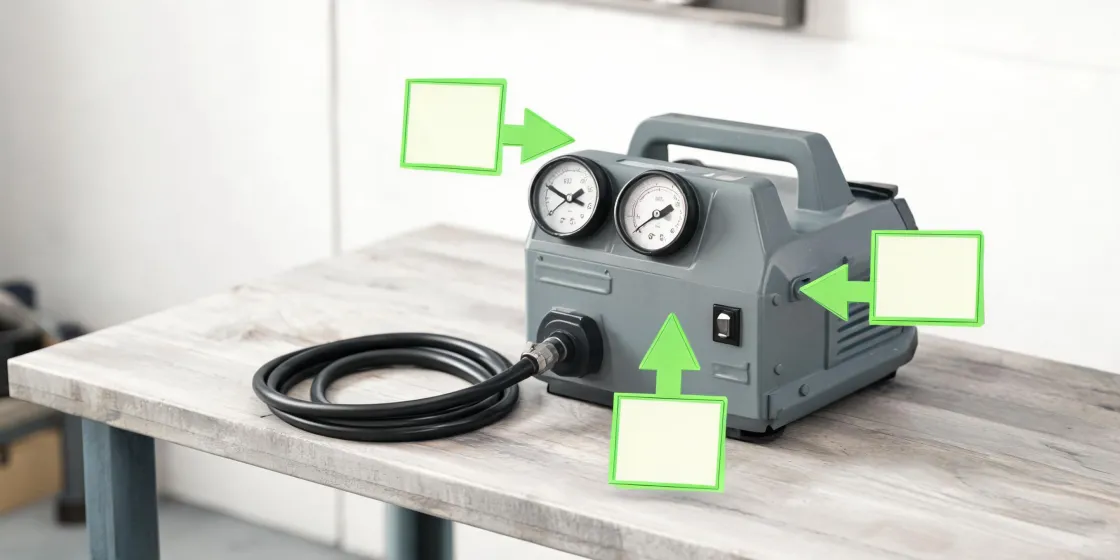
In 2019, I moved into a role where I handled compressor and air-tool service orders for small workshops and contractor crews. By the end of Q1 2024, I had documented 11 avoidable equipment mistakes that added up to roughly $8,000 in wasted labor and replacement parts. The most expensive of those mistakes were not caused by bad brands. They were caused by assumptions.
If you have been searching for a used California Air Tools 8010, I want you to read this before you send a deposit or drive across town. The 8010 can be a genuinely good compressor. But the word quiet can hide the real questions: has the tank been drained? Is the current pump healthy? And does the machine match the air tool workload you are about to put on it?
The Surface Problem: Comparing the Wrong Specs
I hear people compare an air compressor 6-gallon 150 psi unit to a California Air Tools compressor and think they are basically the same because they look similar in the corner of a trailer. That thinking follows the same shortcut I used in 2021. A customer asked whether an air compressor 6-gallon 150 psi unit could run a trim nailer and a small air ratchet as well as the California Air Tools unit he had just sold. I said it should be close enough. He bought it and called me two days later asking why it ran constantly.
Maximum pressure is only where the switch stops. Tank size is stored volume. The number that matters is CFM at the pressure your tool actually uses. Two compressors can say 150 PSI on the label and still deliver very different airflow. The 6-gallon unit in that story had more tank pressure but a weaker pump, so it kept cycling and never caught its breath.
The same discipline applies to a used California Air Tools 8010 or a California Air Tools 10020. The model number is not a complete spec sheet. The duty cycle, pump condition, and CFM can be different from one used unit to another, especially if the previous owner did not take care of the filters or valves. If you compare those machines only by tank size or maximum pressure, you will miss the number that decides whether a job gets finished.
The Hidden Maintenance Mistake: Air Compressor Oil Change Assumptions
Here is where I made one of my cringiest mistakes. When I first started doing service work, I believed that an air compressor oil change was a safe routine on any older compressor. I almost added compressor oil to an oil-free pump because I was following a habit instead of reading the pump spec.
The truth is that some compressor pumps are oil-lubricated, and some are oil-free. Many of the compact California Air Tools ultra-quiet units I have worked on use oil-free pumps. That does not make them maintenance-free. They still need tank draining, filter inspection, valve checks, and proper storage. But they do not need oil in the pump, and adding oil can cause real damage.
If your machine has an oil fill cap and a sight glass, then yes, an air compressor oil change is part of the deal. Use the oil grade in the manual, log the hours, and do not substitute hydraulic oil or motor oil just because the bottle is nearby. If the pump manual says oil-free, do not add oil. The correct maintenance is a different job.
Before I buy any used compressor, I now check two things: the model manual and the physical pump. Does it have an oil fill port? Is there a maintenance sticker? If the seller cannot tell me whether it is oil-lubricated or oil-free, I assume the previous owner did not know either. That is already a red flag.
The Hydraulic Cylinder Question
Another way assumption gets expensive is when a search for how to get air out of a hydraulic cylinder lands on a compressor page. I understand why. A cylinder is not moving smoothly. A compressor is sitting there with a pressure gauge. It feels reasonable to use pressure to push air out.
I once came close to suggesting exactly that. In 2022, a customer was rebuilding a hydraulic cylinder from a compact loader attachment, and the rod moved erratically. My first thought was to put low pressure from the shop compressor on the return port and push the trapped air out. The customer, wisely, said he would ask a hydraulic shop. That pause changed the way I talk about pressure equipment.
Do not use an air compressor to bleed or purge a hydraulic cylinder.
A hydraulic cylinder is built around hydraulic fluid. Compressed air is a spring. A seal that would only weep oil under normal hydraulic pressure can become a dangerous failure point if air is compressed behind it. The rod or cap is not a toy.
So what is the direct answer to how to get air out of a hydraulic cylinder? Bleed it with the hydraulic system's own fluid. Release pressure, position the cylinder so the bleed port or the highest hose connection can vent, open the bleed screw slightly, and then cycle the pump slowly through full strokes. Watch for fluid without foam. Close the bleed, cycle the cylinder again, and repeat if needed. If the cylinder has no bleed screw, use the service manual for that specific component. Do not invent a procedure with compressed air. If the motion is still jerky after bleeding, the problem may not be air; it may be a worn piston seal.
The Real Cost Is Perception
All of this matters because a compressor is part of your public image. When I show up to a job with a compressor that cannot keep air pressure stable, the client does not blame the pump. They blame me. When I bring a compressor that sounds like it is dying, the client notices before I say hello. The quality of your equipment shapes how they judge the quality of your work.
Quiet matters, but quiet is not the same as silent. I have never met a California Air Tools unit that made zero noise. The ultra quiet description is relative, and I appreciate it for indoor work. But a quiet machine that is undersized or poorly maintained will still create a bad first impression. A clean filter, dry tank, and correct oil choice are small details that tell a client you will handle the details that matter.
The Short Checklist I Use Now
My full checklist is too boring for an article. The version on the wall above my bench is this.
- Do not buy a used California Air Tools 8010 on the strength of a listing photo. Run it under load, let it build pressure, and open the tank drain to see what comes out.
- Compare CFM at the working pressure your tools actually need, not just tank size and maximum PSI.
- Check the pump type before buying oil. Oil-lubricated pumps need an air compressor oil change on the manual's schedule. Oil-free pumps do not get oil.
- Do not use an air compressor to bleed a hydraulic cylinder. Trapped air leaves through a bleed port or a service procedure, pushed by hydraulic fluid.
I started maintaining that checklist after the hydraulic cylinder conversation in 2022. Since then it has stopped me from several bad purchases and at least one dangerous proposal. The past few months have been calmer because of it.
This is my experience as of January 2025. Product lines change, and manufacturer manuals are the final authority. If you are looking at a used California Air Tools 8010, a California Air Tools 10020, or any air compressor 6-gallon 150 psi unit, check current specs and maintenance instructions first. And if a hydraulic system is involved, find the service manual or call someone who knows hydraulics. The compressor will still be there afterward.

Maren Jorgensen
Maren Jorgensen is an independent hand tool and torque applications analyst covering wrenches, pliers, screwdrivers, hammers, sockets, ratchets, hex keys, and tool sets. She applies ISO 6789-1 torque-tool conformance principles while examining jaw capacity, leverage, fastener engagement, torque range, accuracy, handle geometry, and material hardness. Her practical guides help tradespeople and procurement teams select suitable tools, plan controlled tightening, and compare durability without relying on brand reputation alone.