Do Electric Nail Guns Need an Air Compressor? Electric vs. California Air Tools 5510SE
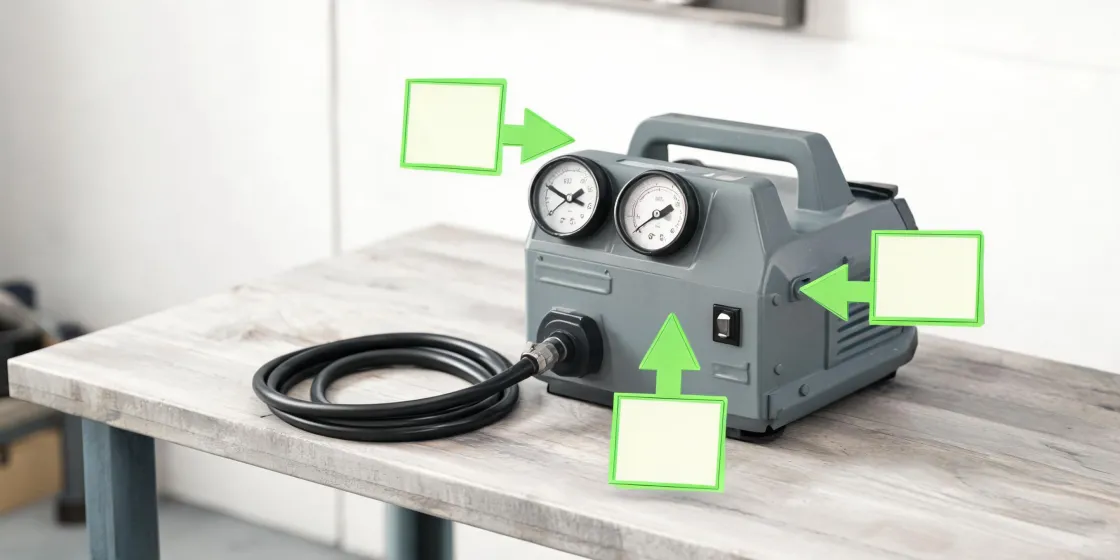
Do electric nail guns need air compressor? No. If you plug one in or snap in a battery, you're done—no compressor, no hose, no regulator. That simple answer usually ends the conversation. But if you are choosing between a cordless nailer and a pneumatic setup with a California Air Tools 5510SE, the real question is what the whole system costs you in noise, power, maintenance, and time.
I've coordinated equipment orders for shops and crews for years. If you need a number, it's between 180 and 220 rush or planned tool replacements—I'd have to check the spreadsheet to be more precise. In that time, I've watched buyers make the same mistake over and over: they choose the tool first and the air system second. This article is a direct comparison between electric nail guns and pneumatic nail guns, using the California Air Tools 5510SE as the benchmark quiet compressor.
The Comparison Framework
What I'm comparing is not just no compressor vs. compressor. It's the complete workflow. On one side, you have an electric nail gun: battery, charger, and the tool. On the other side, you have a pneumatic system: California Air Tools 5510SE, hose, coupler, regulator, and a pneumatic nailer.
The 5510SE is a 5.5-gallon, 1.0 HP, oil-free compressor rated around 68 dB and roughly 5.1 CFM at 90 psi, with a 125 psi maximum. Those numbers matter, but they matter differently for a finish nailer than for an impact wrench.
Noise: The Compressor Is Not the Loud Part Anymore
The old 'compressor is too loud' thinking comes from an era before ultra quiet designs. It's outdated. The 5510SE runs somewhere around 68 dB. That's closer to a normal conversation than to a construction site, and because it has a 5.5-gallon tank, it doesn't run continuously while you work.
Electric nail guns seem quieter because they don't have a compressor humming in the background. But the nail gun itself still makes a sharp mechanical impact. A day of trim work with a cordless nailer is not a quiet day.
According to NIOSH (cdc.gov/niosh), hearing damage becomes a real risk with prolonged exposure above 85 dB. A 68 dB compressor changes the risk profile. That means the noise advantage of electric nailers is smaller than most contractors assume.
Noise conclusion: If you were leaning electric because you don't want a noisy compressor, look at the California Air Tools ultra quiet air compressor before you make that decision. The noise gap has mostly closed. The portability gap is the real reason to go electric.
Power: Pneumatic Still Has the Edge for Production Work
A pneumatic nail gun is lighter in hand because there's no motor and no battery. The power comes from compressed air, not a lithium-ion charge. On the last nail of a long day, a pneumatic nailer drives the same depth as the first nail. Battery tools can start to fade, especially in cold weather.
Will the 5510SE run a pneumatic nail gun? Yes. Finish nailers are intermittent. They take a burst of air, the tank refills, you shoot again. For one-person trim work, a 5.5-gallon tank with around 5.1 CFM at 90 psi is enough. If you are running multiple crews or heavy framing, you need a bigger California Air Tools unit. But for common trim, baseboard, and casing work, this size is the sweet spot.
Power conclusion: For production nailing, pneumatic tools are still more consistent than electric. In 2025, that's an unpopular thing to say, but it's what I see on real jobsites.
Cost: The Sticker Price Always Hides Something
I've learned to ask what's NOT included before I ask what the price is. That habit came from too many projects where the cheaper option ended up costing more a year later.
Here's a ballpark comparison, as of January 2025. A good battery-powered 18-gauge brad nailer kit with battery and charger runs from about $250 to $400. A spare battery adds another $100 or more. A pneumatic 18-gauge nail gun costs $80 to $150. Then add the compressor and air compressor accessories.
The California Air Tools 5510SE is typically listed around $350 to $450, depending on the vendor and bundle. Add a 50-foot hose, coupler, regulator, tire chuck, and blow gun, and you're looking at another $80 to $150. All in, a complete pneumatic setup is around $550 to $750.
That looks like the electric side wins until you consider what the compressor can do beyond nailing. It blows off a workbench. It fills tires. It runs air ratchets and light-duty impact wrenches. If a shop does any of those jobs even twice a month, the compressor starts paying its share.
The vendor who lists all fees upfront—even if the total looks higher—usually costs less in the end. Battery platforms get replaced. Chargers get orphaned. A compressor tank and a rebuildable pneumatic tool have longer service lives.
Cost conclusion: If you need one tool for a small task now, cordless is cheaper. If you are buying for a shop, the pneumatic system is the better investment over a five-year window.
Maintenance and Parts: What Happens When Something Breaks
In my first year coordinating tool fleets, I made the classic rookie mistake: I chose everything on initial price. I learned that lesson when a battery platform was discontinued and the replacement charger cost more than the original tool. Since then, I ask about support before I ask about discounts.
Pneumatic tools are simpler to repair. A nail gun with an air leak or worn O-ring can often be rebuilt with a small kit. I once helped a shop in Midvale search for air wrench parts Midvale after an impact wrench died on a Thursday. The parts diagram showed a rebuild kit, a local supplier had it in stock, and the wrench was back in service the next morning. That kind of repair story is harder to tell with sealed battery tools that cost more to fix than to replace.
The compressor itself needs routine care. You have to drain the tank, clean the inlet filter, and check for hose leaks. The 5510SE is oil-free, so you don't deal with oil changes. But moisture is still your enemy, and a water separator is worth adding if you plan to spray or run high-demand tools.
Support conclusion: When available today matters, pneumatic tools backed by a parts network beat disposable electronics. The Midvale example isn't a spec sheet thing. It's a downtime thing.
Bottom Line: What Should You Buy?
Do electric nail guns need air compressor? Again: no. If you're a solo carpenter doing light brad nailing once a week, a cordless nailer is a no-brainer. No hose, no tank, no compressor maintenance. Just grab the gun and go.
But if you have a shop, a crew, or a list of work that includes anything besides nailing, buy the California Air Tools ultra quiet air compressor and a pneumatic nailer. The 5510SE is quiet enough for occupied work areas, sized right for finish nailing and light air tools, and supported by a real parts network.
Oh, and don't cheap out on air compressor accessories. A cheap coupler that leaks will make every tool feel starved for air. Buy a decent hose and fittings once, and the system will feel effortless.
One limitation worth naming: my experience is based on U.S. shops and jobsites. If you're buying in a region where California Air Tools distribution is thin, the support picture changes. Check local availability and current specs before you order. Then buy the system that gets the next job finished on time.

Maren Jorgensen
Maren Jorgensen is an independent hand tool and torque applications analyst covering wrenches, pliers, screwdrivers, hammers, sockets, ratchets, hex keys, and tool sets. She applies ISO 6789-1 torque-tool conformance principles while examining jaw capacity, leverage, fastener engagement, torque range, accuracy, handle geometry, and material hardness. Her practical guides help tradespeople and procurement teams select suitable tools, plan controlled tightening, and compare durability without relying on brand reputation alone.