B2B Hardware Receiving Checklist: 7 Steps for Wera Tool Kits, Mini Air Compressors, Ball Valves, and Keypad Locks
-
Before You Open a Box: 7 Steps, In Order
-
Step 1: Match the ASN to the PO before you touch a crate
-
Step 2: Inspect packaging and seal integrity
-
Step 3: Open the Wera Tool-Check Plus and verify the bit contents against the item list
-
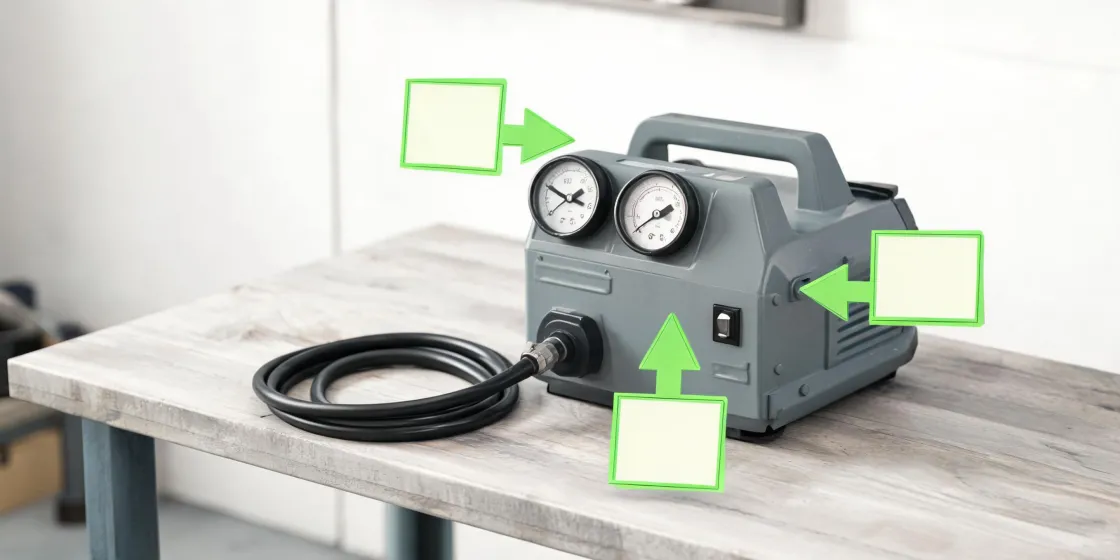
Step 4: Bench-test the mini air compressor
-
Step 5: Verify every ball valve against the catalog spec
-
Step 6: Bench-test the keypad lock—including one full code change
-
Step 7: Log the discrepancies and escalate in writing within 24 hours
-
Step 1: Match the ASN to the PO before you touch a crate
-
What I Learned Paying for Speed vs. Hoping for It
-
Common Mistakes That Slip Past Receiving
I'm the quality and brand compliance manager at an industrial supply house. My job title sounds strategic; the actual work is standing at the dock, cutting shrink wrap, counting parts, and checking labels against purchase orders. Roughly 200 SKUs a year pass through my bench. In 2024, we rejected 7% of first deliveries over spec or count mismatches. Sounds small until you do the math—at our volume, that was six figures in delayed shipments and re-orders.
This is the checklist I now apply to every mixed hardware order. It covers the categories that trip us up most: Wera tool kits (the Tool-Check Plus and T-handle hex sets), mini air compressors, ball valves, and keypad locks. If you buy any of these, this is what to check—in order, because the order matters.
Bottom line: signing a delivery note looks like a two-second decision. It's actually a $20,000 decision (average cost of one incoming rejection at our shop in 2024, once you count the redo, the air freight, and the client phone call).
Before You Open a Box: 7 Steps, In Order
Skip the order and the sequence falls apart. I've watched teams fix one problem and miss three others because they started with the hardware and ended with the paperwork. Do it in this sequence.
Step 1: Match the ASN to the PO before you touch a crate
The Advance Shipping Notice is your only leverage before you accept liability. Pull three documents side by side: the purchase order, the ASN, and the packing list. Three numbers have to line up—item count, item codes, and batch/lot numbers. If any single one is off by even a line, you stop and call the supplier before signing.
In my first year, I made the classic rookie mistake: I counted boxes and signed, assuming the ASN was accurate. Two pallets were short, three were the wrong SKU, and the supplier's contract said "signed for in good condition" meant I owned the discrepancy. That one cost us a $1,200 redo (which, honestly, was the cheap version of that lesson). Now the ASN check is non-negotiable, even if it adds 20 minutes to every receiving.
Checkpoint: three documents, three matching numbers, zero verbal confirmations. If the supplier confirms something by phone, get it in writing before you sign.
Step 2: Inspect packaging and seal integrity
Don't cut tape yet—look at it first. Look for crush damage on the mini air compressor corner, moisture indicators on the valve cartons, and torn shrink wrap on the Wera tool cases. A torn seal on a tool case usually means someone opened it downstream (or that the case got resealed after a partial pull). Both are red flags.
For compressors and ball valves specifically, check the desiccant packets and the anti-corrosion wrap. If the desiccant is saturated or the wrap is ripped, assume the unit has been exposed to humidity. That's a deal-breaker for anything going into a client's clean environment.
Step 3: Open the Wera Tool-Check Plus and verify the bit contents against the item list
This is where most receiving teams lose time—not because the kit is wrong, but because they don't know what "right" looks like. The Wera Tool-Check Plus 1 (item 05049055001) is a modular bit-and-socket set. Before accepting, open the case and verify the contents bits against the manufacturer's spec sheet, not just against the packing slip.
Three checks that matter:
- Bit count and profiles—cross-check every bit against the printed layout. Missing Torx or hex sizes are the most common shortage.
- Socket and ratchet engagement—seat each socket on the ratchet. If a socket wobbles or the ratchet doesn't click cleanly, the set has a QC problem that a bit-count won't catch.
- Branding and finish—counterfeit Wera cases show up in secondary channels. Look for the stamped logo on the ratchet handle, the color-coded bit rings, and the printed item number on the case spine.
Same logic for the Wera T-handle hex key set: check the size range, the handle length, the tip geometry (rounded vs. square), and whether the color coding matches the size markings. A T-handle set that "looks fine" but has been mismatched by the factory—one size swapped for another—will fail a technician on the first job.
Checkpoint: if you can't name every bit in the kit from memory, you can't sign for it. Print the spec sheet and use it.
Step 4: Bench-test the mini air compressor
Don't ship a compressor out without running it. A five-minute bench test catches 90% of incoming problems. Power it on, let it build pressure to the rated cut-off, and watch the gauge. Two things matter: does it reach the rated pressure, and does the auto shut-off trip at the right point?
Also check the hose and fittings while the unit is pressurized. A soapy-water test on the quick-connect and the tank drain is old-school but effective. If you're going to hand it to a technician who's on a deadline, you want to know now—not when they're 30 miles away on a service call.
Step 5: Verify every ball valve against the catalog spec
This is where I see the most silent failures, because ball valves look identical until they don't. Pull the ball valves catalog (or the supplier's current datasheet) and match on four points per unit:
- Body material and pressure rating—stamped on the body; verify it matches the PO line.
- End connections—threaded vs. flanged vs. socket weld. This is the #1 wrong-item error we see.
- Port type—full port vs. standard port. Visually different, functionally very different, and easy to mis-ship.
- Manual operation—open and close each valve by hand. If the handle binds or the ball doesn't return smoothly, flag it.
Keep the material certificates in the same packet as the receiving report. If a valve fails downstream, the cert is the difference between a warranty claim and a write-off.
Step 6: Bench-test the keypad lock—including one full code change
Here's the step almost everyone skips: they test the default code, see the lock open, and sign. That's not a test. That's a hope.
What you actually do is run the full sequence a technician would run in the field. For a Schlage-style keypad lock, that means: power it up, enter the factory default, change the code, lock and unlock twice with the new code, then factory-reset it back before shipping. If the change-code step fails—wrong beep pattern, code won't save, lock reverts to default—you have a firmware or keypad issue that will become a service call.
If you're shipping to a site that will set up their own code, at least confirm that the change-code procedure in the manual matches the behavior on the unit in front of you. Manuals get updated; units don't always match. That mismatch is a red flag (not that anyone reads the manual until the technician is on site).
Checkpoint: the lock isn't "working" until it has accepted a new code, rejected a wrong code, and survived a reset. Anything less is a partial test.
Step 7: Log the discrepancies and escalate in writing within 24 hours
Every finding goes into one tracker, with photos, item codes, and the exact PO line. Then it goes to the supplier in writing within one business day. Verbal reports get lost; written reports get credits.
The escalation deadline matters more than the format. In 2024, we caught a shipment of 40 ball valves with the wrong port type. We flagged it on day one, and the supplier cross-shipped replacements in four days. If we'd waited until the weekly review, that would have been three extra weeks of holding cost (note to self: keep this 24-hour rule on the QC board).
What I Learned Paying for Speed vs. Hoping for It
Here's the position I've landed on, and I'll defend it: in time-critical hardware, you pay for certainty, not just speed.
In Q3 2024, we had a client install deadline that couldn't move. The Wera Tool-Check Plus kits were the long pole. We had two options: standard freight with a "probably by Thursday" estimate, or a guaranteed rush delivery for $400 more. We'd been burned twice that year by "probably on time" promises, so I pushed for the rush—even though $400 on a tool order felt excessive at the time.
The rush order arrived Wednesday morning, fully inspectable, with time to spare. The other option, based on the supplier's own history, was a coin flip. Missing that install would have cost us a $15,000 project and a relationship we'd spent two years building. The $400 wasn't a speed fee. It was an insurance premium, and it was the cheapest line on the whole job.
Then again—not every order needs rush. Standard freight is fine when your deadline is three weeks out. But the moment a deadline is fixed and the hardware is the bottleneck, the cheapest option stops being the cheapest option. That's the one thing I'd tell any new buyer on day one.
Common Mistakes That Slip Past Receiving
A few things I've watched people get wrong, in no particular order:
- Counting boxes instead of counting items. A carton labeled "10 pcs" is not a count. Open it.
- Trusting the label over the spec sheet. Labels get printed wrong. Spec sheets are the source of truth.
- Skipping the code-change test on keypad locks. The most common field failure we see, and the easiest to catch on the bench.
- Filing the material certs separately from the receiving report. When you need them, you'll need them together.
- Waiting for the weekly review to escalate. A week of silence tells the supplier "this isn't urgent." It always is.
None of this is glamorous. The checklist takes about 45 minutes for a mixed order. But it's the difference between a shipment that clears and a shipment that comes back—and at the scale most B2B buyers operate, that 45 minutes is the highest-leverage time you'll spend all week.

Amara Nwosu
Amara Nwosu is an independent hydraulic tool and pump systems analyst covering jacks, cylinders, pullers, torque wrenches, hand pumps, power pumps, and porta-power equipment. She applies ISO 4413 safety principles while examining rated pressure, cylinder force, stroke, oil volume, flow, return type, hose condition, load holding, pressure loss, and relief protection. Her technical guides help maintenance and construction teams configure compatible systems, verify safe capacity, and diagnose slow or unstable operation.